I was once struck by a written image of the Vietnam War where a planeload of soldiers were described as being “disgorged” onto the tarmac. That image was so pregnant that till today, I’ve been fascinated with watching how hordes of people can be swallowed into an airplane and then expulsed on landing. As a result, I’ve never felt impatient about getting on or off an airplane. The process of cantering and decanting is such a marvel to behold that I enter a trance. My mind zones out and I feel calm and empty.
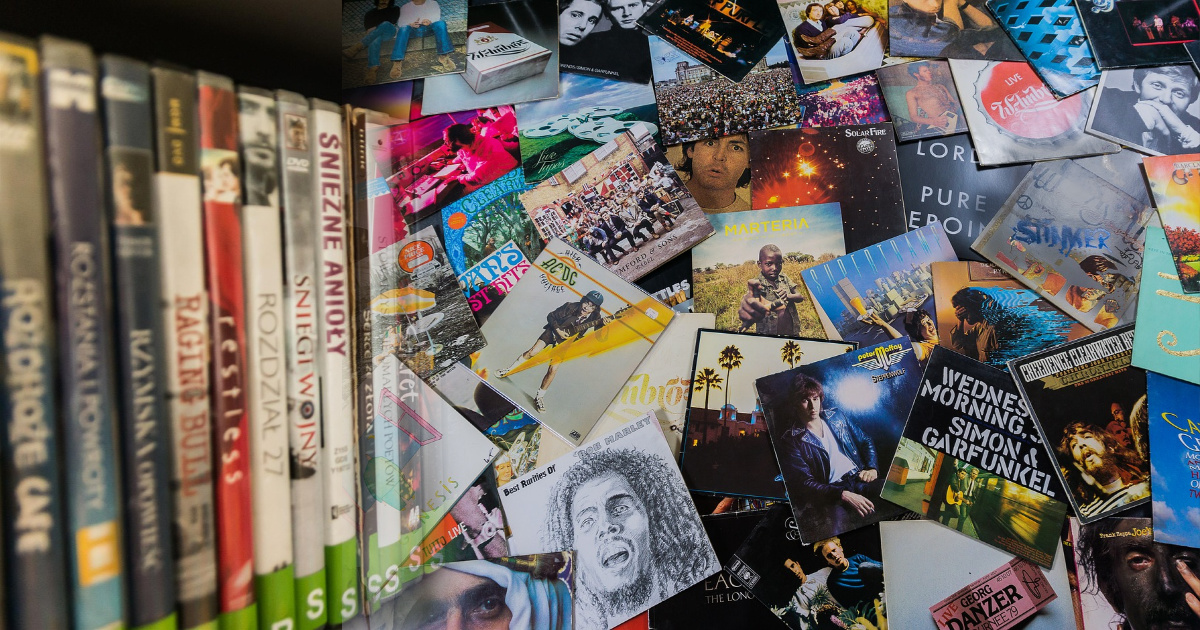
It mirrors my feelings about collecting. Collections come and go. One day, they are neatly stacked up and admired, the next they become fodder for paper or plastic recycling. As a lifelong collector, I must confess that I find no more joy in accumulating. In fact, I sometimes gaze at my hill of DVDs, my mountain of CDs, and my Everest of vinyl records, and I shake my head and think, “What the hell for?” None of this will mean much to anyone without that same experience of history that I felt. None of it is going to save my life either.
As philosopher Walter Benjamin noted, “The phenomenon of collecting loses its meaning as it loses its personal owner. Even though public collections may be less objectionable socially and more useful academically than private collections, the objects get their due only in the latter…Only in extinction is the collector comprehended.” My exception to this quote was a day when my friend asked me to visit his deceased father’s home. He had to empty the house before it was sold. As I stood there amidst the clutter of shelves and narrow passageways, I just couldn’t understand why this guy had complete boxes of pencil sharpeners (well ok, they were all shaped like Chinese pandas), crates of plates and crockery and cupboards of teapots. I don’t think any of us who visited that day could comprehend this guy.
All collectors are obsessional to a degree. We live in fear of the moments when those who cannot comprehend us will say, “Get a life!” But we do have a life. We are the custodians of ordinary history. While most national libraries in the world have become repositories of official or even state history, the Americans have gone even one better – presidential libraries! Man, those guys really don’t want you to forget anything…about THEM!
Well, we don’t want to forget anything either. When Occupy Wall Street began in 2011 to protest income inequality, the People’s Library was accidentally started when a library science student left a box of books as donation. The protest organisers picked up on the idea and soon volunteer librarians organised and collected more books from the public. When the police cracked down on the protest, one of the first things they did was to destroy the 5,554 books collected in The People’s Library. When people get to think for themselves and when they see what’s really going on, they become a powerful force by themselves.
And this is the real meaning of collections. Collections are repositories of knowledge that help to preserve the history of knowledge. But collections are meant to be shared, and not hoarded away. While Walter Benjamin spent his whole life and all the money he had in collecting, he died in 1940 on the French-Spanish border while escaping the Nazis, with only one suitcase. But during his life, he liked to generously give away his collections to friends. That was the same impetus that gave birth to The People’s Library. Collections might not save my life but they might save yours. As long as collections are cantered and decanted in the process of being shared.
So, the next time you express impatience with a collector, please remember that we might be the only ones left who remember what “they” want you to forget!
More to read
From BIG DATA to Small Cinema? Challenges & Opportunities of Cinema in New Media
Reconsidering Real and Metaphorical Gendered Spaces
The Golden Thread of Bengali Cinema: A Journey Through 100 Years