The river Padma has been almost equivalent to a character in legendary Indian filmmaker Ritwik Ghatak’s films. The river had been part of his childhood and growing up years at the ancestral house at Rajshahi, about 245 KM North West from Dhaka, the capital city of Bangladesh. Ghatak spent his childhood and student days there, studying in Rajshahi College. Eventually, the family had to leave East Pakistan (the erstwhile name of Bangladesh) from this house in 1948.
This property was leased out in 1987-88 by the military government to a private Homeopathic college who have been, till date, demolishing most parts of the old structure to accommodate new requirements.
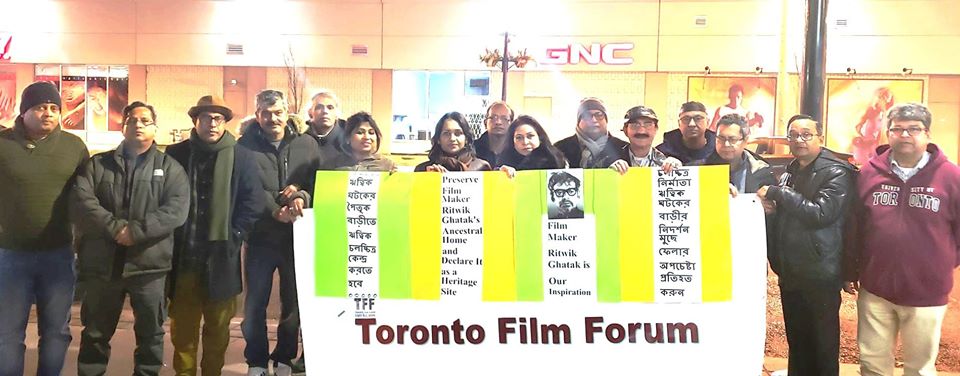
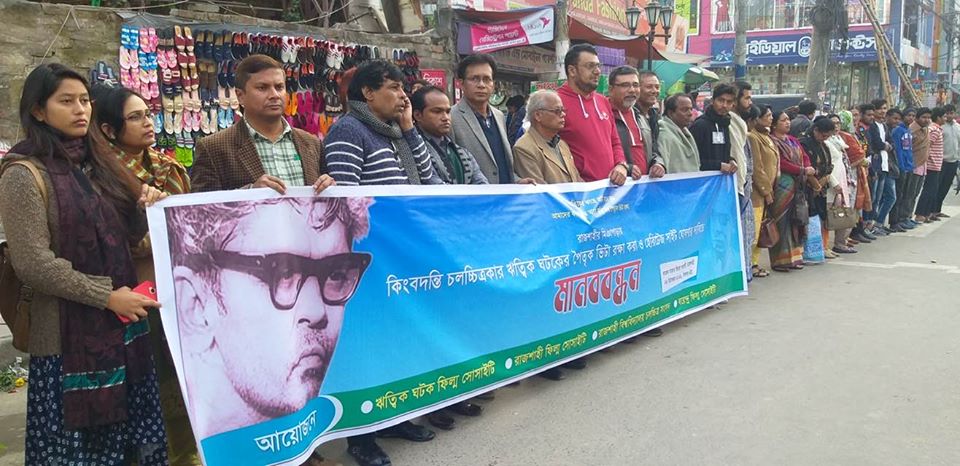
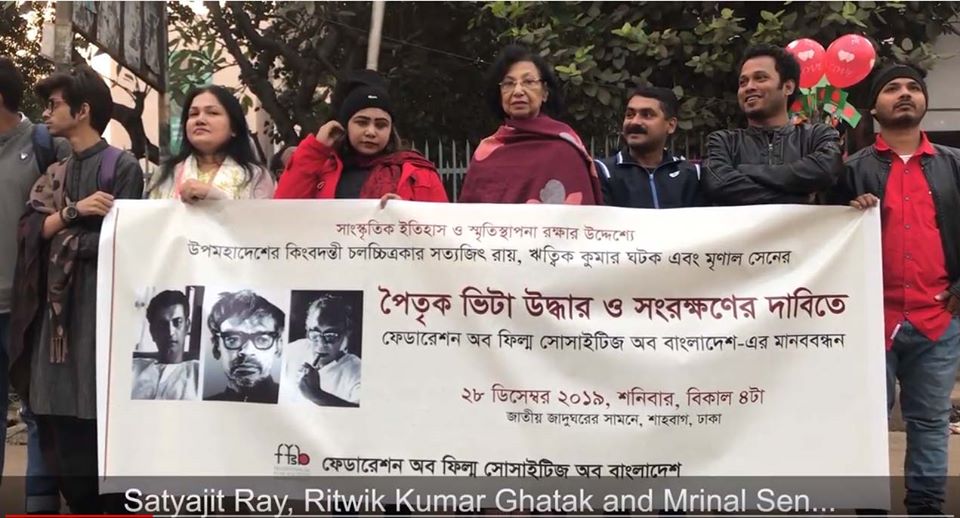
Large sections of the film and cultural community of Rajshahi and Dhaka came on street in the last week of December 2019 to protest against the latest move to demolish another room in Ghatak’s house to make way for a bicycle garage. Human chains were formed in Rajshahi, Dhaka and Toronto to register the protest where many filmmakers, film scholars, college and university teachers, students, activists took part. Eminent film personalities of Bangladesh like Tanvir Mokammel, Morshedul Islam, Nasiruddin Yusuf Bacchu, Shameem Akhtar and many others protested on the street and signed the petition to Government not only to save Ghatak’s ancestral house but also to save other two ancestral houses of Satyajit Ray and Mrinal Sen.
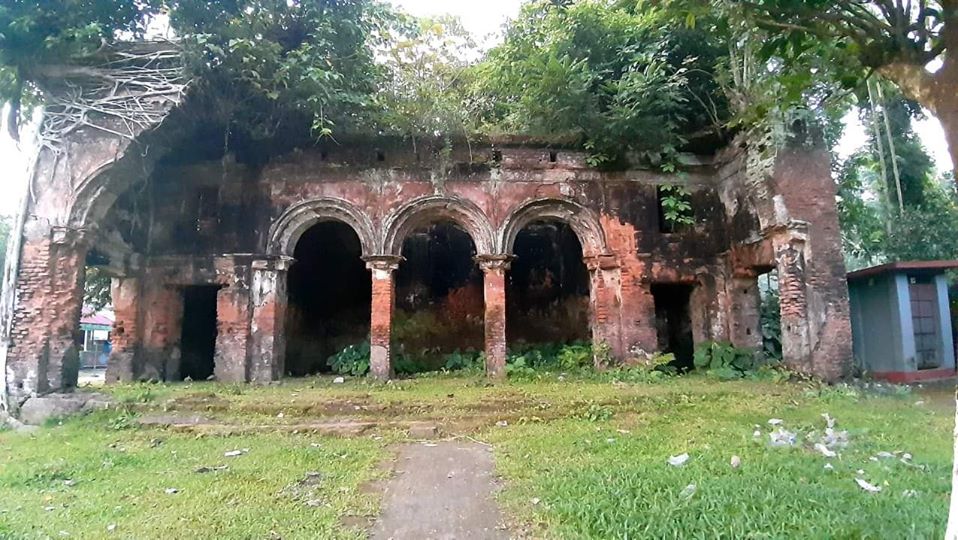
Satyajit Ray’s ancestral house is at Mashua, Katiyadi, Kishoreganj which is about 115 KM North-East from Dhaka. This property is now in a dilapidated condition. Film activists of Dhaka have appealed to the government through the district administration for immediate renovation and preservation of this house. No action has yet been taken in this regard.
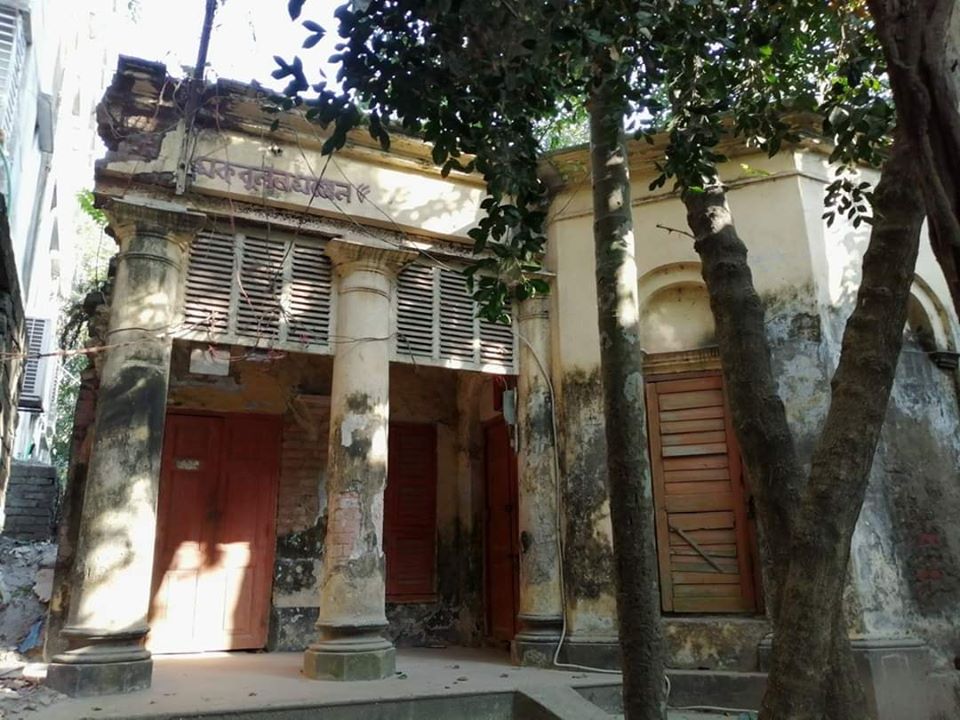
Mrinal Sen’s ancestral house is at Jhiltuli, Faridpur which is about 130 KM West of Dhaka. The house is now under the disposal of a private owner. Most of the property has been demolished to build up new constructions. The original building still stands and it can probably be renovated and preserved if handled with care. Film activists of Dhaka are demanding for the same but there is no positive steps taken yet by the Bangladesh Government.
Taking note of this, the Federation of Film Societies of India (FFSI), the apex body of the huge film societies network of the country (founded by Satyajit Ray in 1959) has decided to initiate an international campaign for restoration of these ancestral houses of the legendary filmmakers that have an intrinsic value in the history of cinema. In the Central Executive Committee Meeting held on 30 January 2020 in Kolkata, a decision was formally taken to take up the issue to the international level so that the Bangladesh Government gives due importance to preserve all the three properties for historical purpose. The issue will also be brought to the notice of the Ministry of Culture, Government of India, Indian National Trust for Art and Cultural Heritage and UNESCO for doing the needful at their concerned levels.
Premendra Mazumder, Vice President of the FFSI and Asia Pacific Secretary of the International Federation of Film Societies (IFFS) will spearhead the campaign to take up the issue at the international forum of IFFS.
More to read
Ray’s Ravi Shankar – A Blueprint for Posterity
Mrinal Sen: The Man Who Fought Through Cinema
‘Illuminating Ray’ A Critique on Gaston Roberge’s Satyajit Ray: Essays (1970-2005)