

Apur Sansar (The World of Apu), the third and last part of the The Apu Trilogy by legendary Indian film-maker Satyajit Ray was released on 1st May 1959. Soumitra Chatterjee debuted on screen with this film and went on to act in 14 of Ray’s 27 feature films as the central character. At the age of 80+ Soumitra is still active on screen and on stage (theatre being his first love and he acts and directs plays even today with equal élan) and remains a vital element to the Bengali intelligentsia and existence.
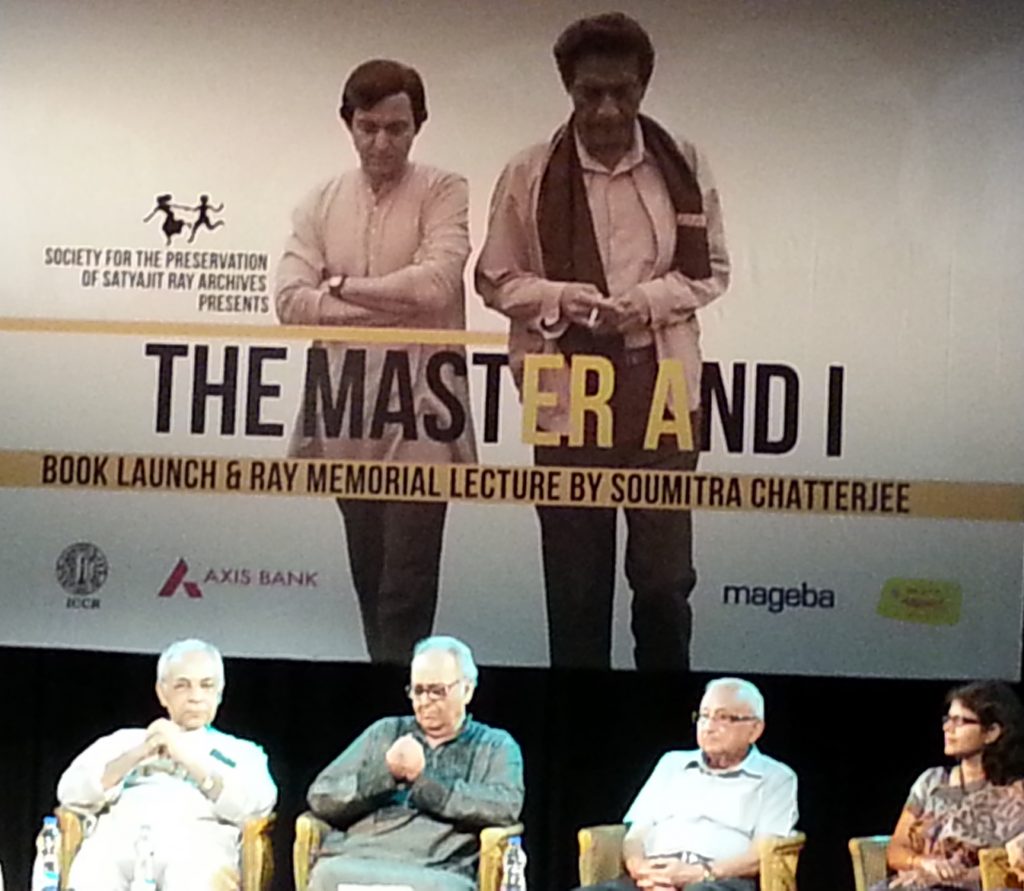
Fifty-six years after the release of Apur Sansar to mark that iconic event and to celebrate the 94th birth anniversary of Satyajit Ray (born on 2nd May 1921), Society for the Preservation of Satyajit Ray Archives organized a lecture session by Soumitra – “The Master and I” at Satyajit Ray Auditorium, Rabindranath Tagore Centre, ICCR, Kolkata. For the last few years the Ray Memorial Lecture on the occasion of Ray’s birthday had been an event which drew crowd to the fullest. We had the privilege to listen to the likes of Javed Akhtar, Shyam Benegal and Naseeruddin Shah. This is the first time a person who was an integral part of the Ray team would pay homage to the master and also delivering the lecture in Bengali.
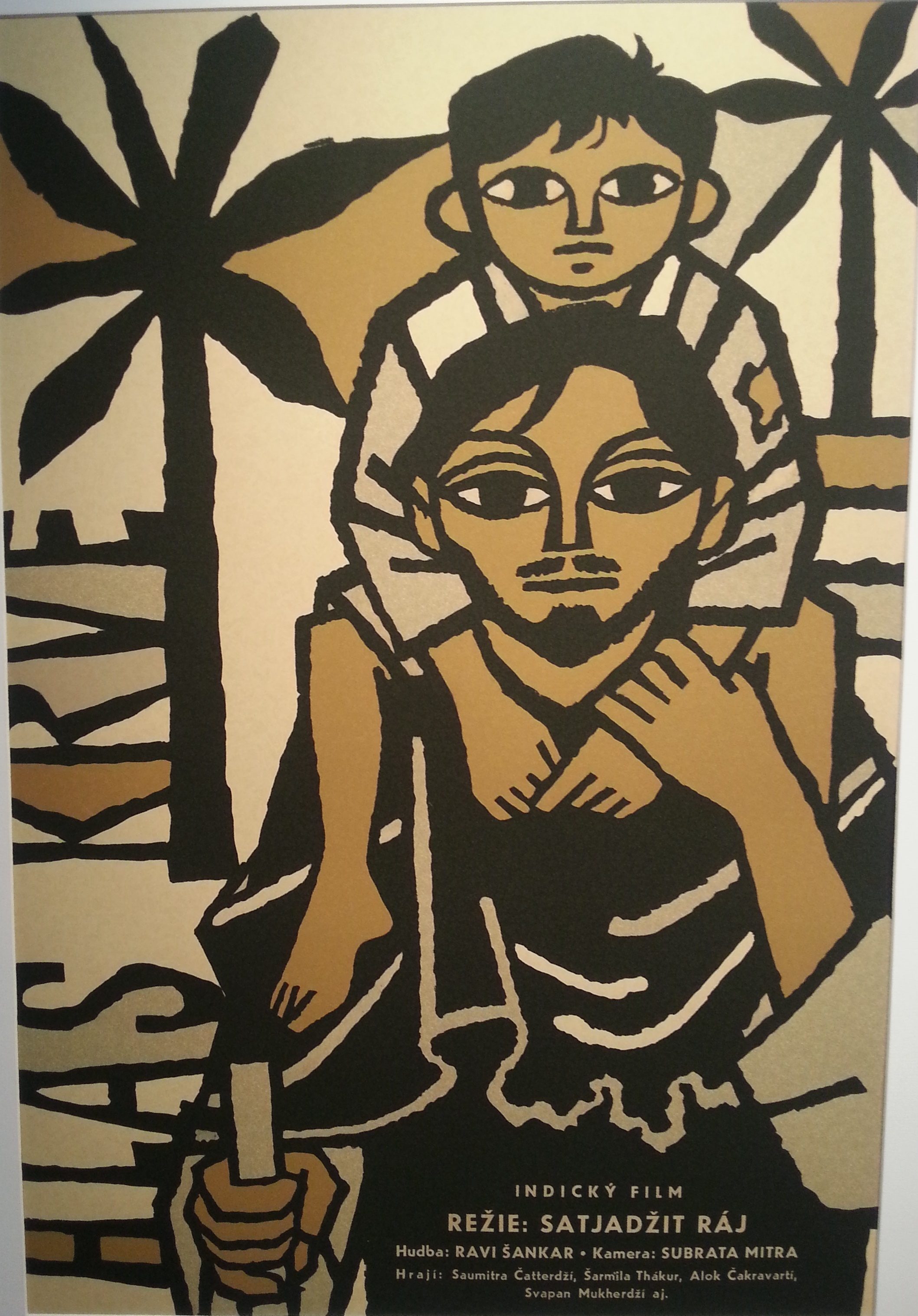
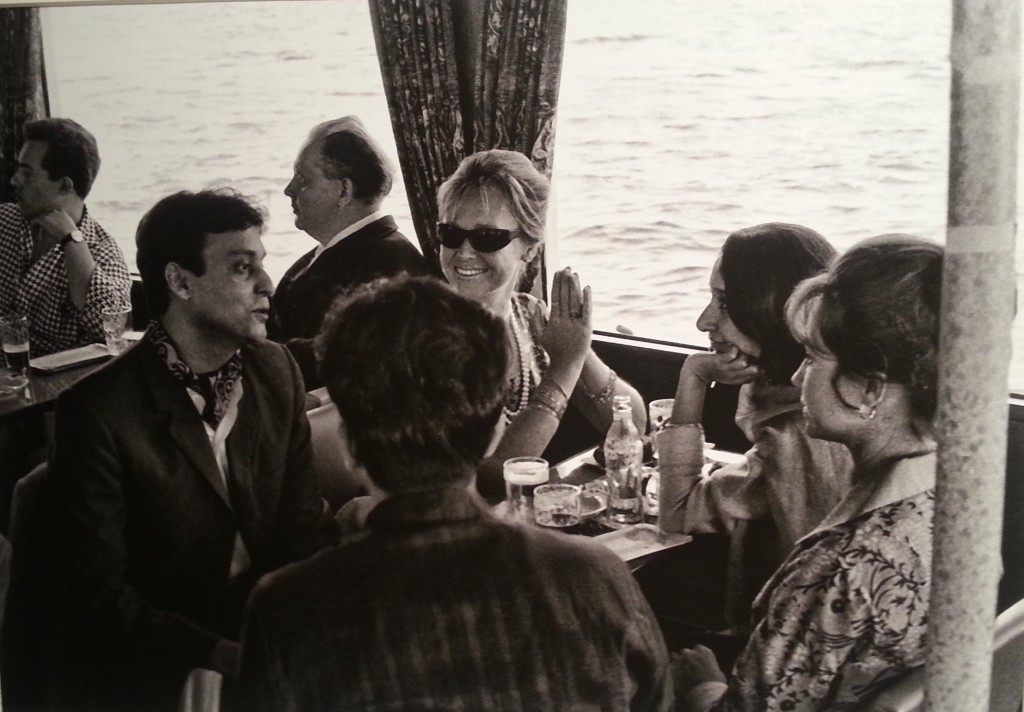
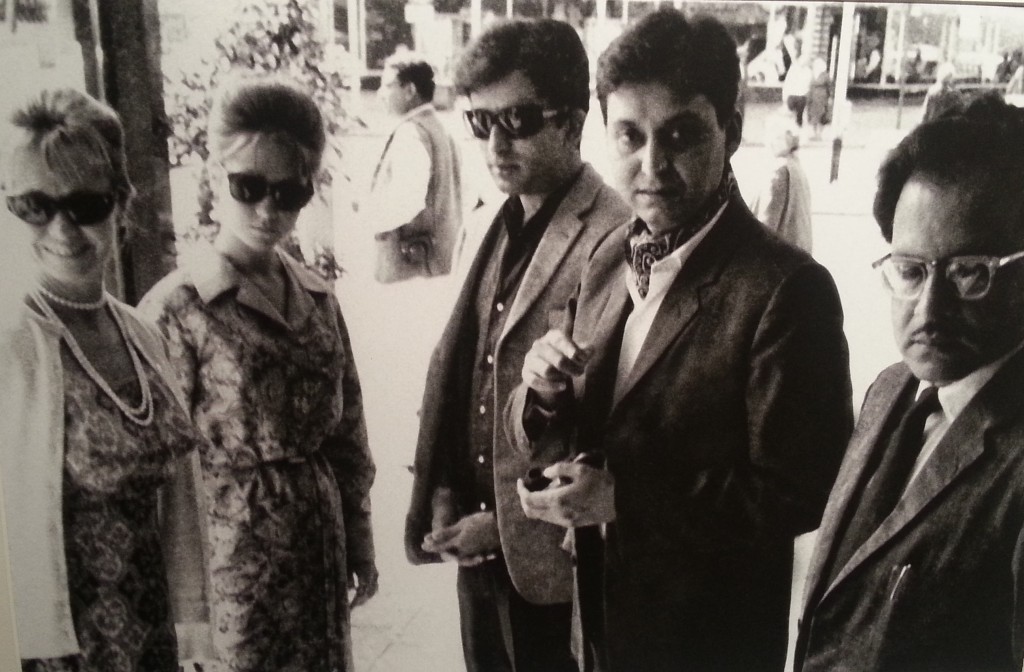
The evening started off with the inauguration by Chatterjee of a seven-day exhibition of photographs that depict the Ray-Chatterjee association. The exhibition is excellent – a mixture of posters and candid pictures taken by a host of photographers over a period of time and both during shooting or in private moments. This was followed by a book launch – Probondho Samogro, a collection of essays in Bengali by Satyajit Ray brought out by Ananda Publishers in association with the Society.
Soumitra Chatterjee himself is a legend in his own right – a playwright, an elocutionist, a theatre actor and director, a poet and the editor of one of the finest literary magazines of Bengal – Ekkhan. It is not surprising hence that Soumitra’s delivery will be ornate, literary and yet touching the deeper soul with such magnificence that the audience will be left numb and emotional. Ray-Soumitra association is unparalleled in Indian cinema finding some semblance in World cinema in Kurosawa-Mifune and Bergman-Max Von Sydow. It is hence a bit strange that Soumitra had to wait for the Ray Memorial Lecture this long.
Soumitra narrowed his focus on Ray’s handling of actors – how awe-inspiring it was to find that he would probably never cast someone who doesn’t seem fit for the role apart from a very few deviations. To elaborate, Chatterjee reminisced how he longed for the role of Goopi in Goopi Gyne Bagha Byne and insisted that he would do the job well if given a chance. Satyajit seemed not convinced that Soumitra’s aristocratic looks can be fully transformed to a village urchin in Goopi with make-up and finally ended the conversation saying – “Your profile is not matching with the mental image I have”. We all know now that Tapen Chatterjee as Goopi reached such unsurmountable heights that is difficult to achieve for any great actor as well including Soumitra.

On a lighter note Soumitra recalled that he was the first choice for Ashoke (later played by Arun Mukherjee) in Ray’s first colour film Kanchenjungha (1962) but couldn’t do so due to date problems. Later Ray commented that it was better that a complete newcomer played the role instead of Soumitra (who was already an established hero of the mainstream romantic films by then) since otherwise the open ending of the film wouldn’t have been justified to the audience who would naturally deduce a romantic bonding between the character and the heroine. Soumitra muses that at least in this case Ray’s original choice would have been a mistake!
What marks Chatterjee’s lecture is not the anecdotes from his own acting or his association in several Ray films and in general for over three decades working together. He confessed that the relation was a personal one and even when he was not acting in a Ray film he would always be invited by Ray to hear and discuss the script. What marks the speech more is Soumitra’s reflections of the handling of Ray of his actors. As he mentioned, Ray had no unique and single technique. He had worked with professional actors, non-actors and even stars bigger than anyone else. Ray’s treatment had been eclectic to bring the best in every one of them. Even with the child artists of his several films his capability of mixing with them at their level helped him to bring out the best in them at a time when acting of most of the child artists in Bengali cinema seemed absurdly ridiculous.
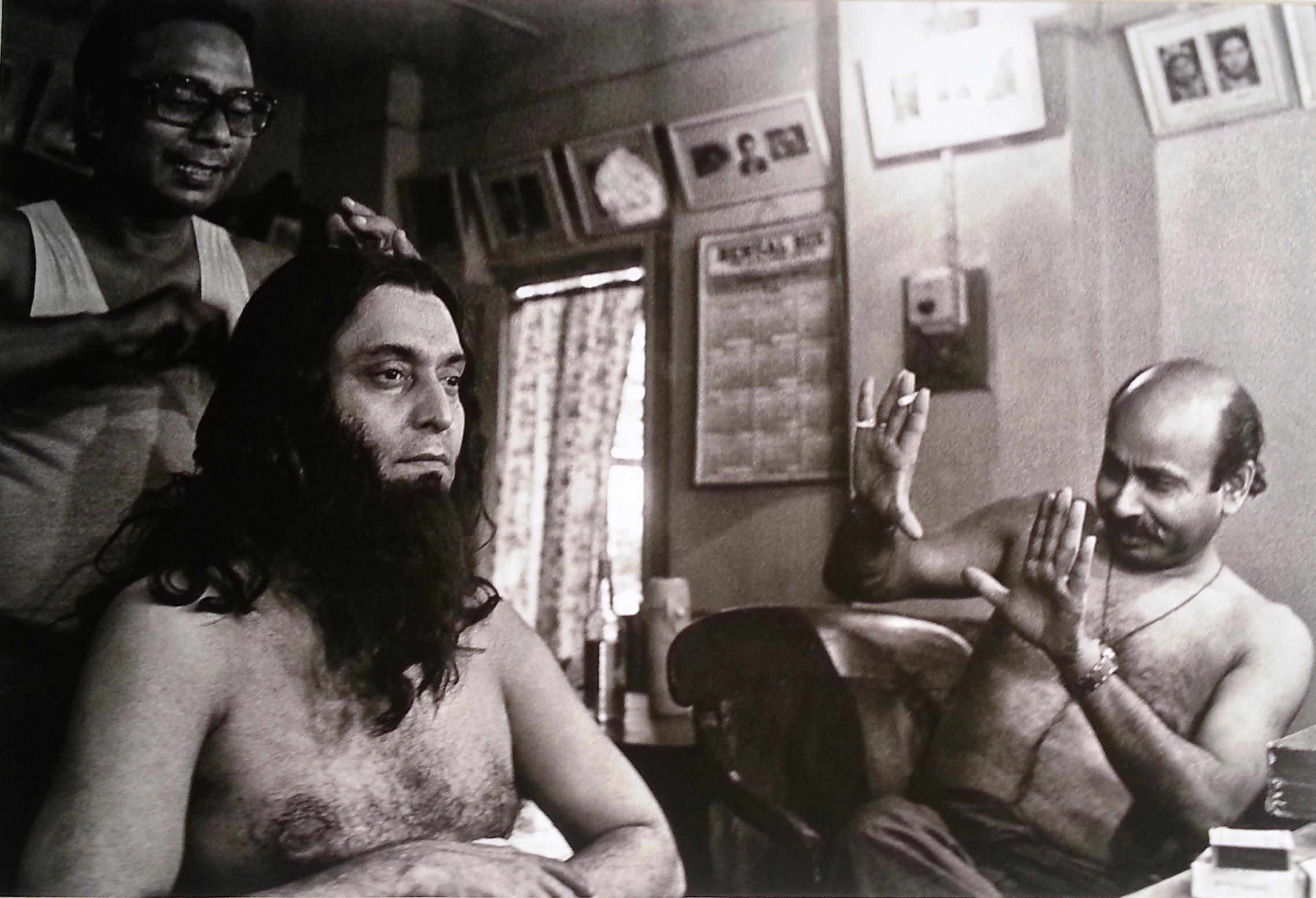
Soumitra rekindled the lecture with special reference of Gobinda Chakraborty who played Dinabanadhu in Ashani Sanket – the old Brahmin who would come from a nearby village to Gangacharan’s (played by Soumitra) house in search of food and shelter. Soumitra described in vivid details how Gobinda Chakraborty articulated his transformation from an innocent old person thoroughly confused with the effects of a man-made famine to one who has to turn sly in order to survive for him and his family. Gobinda Chakraborty had also played small yet important roles in Hirak Rajar Deshe, Goopi Gyne Bagha Byne and Teen Kanya.
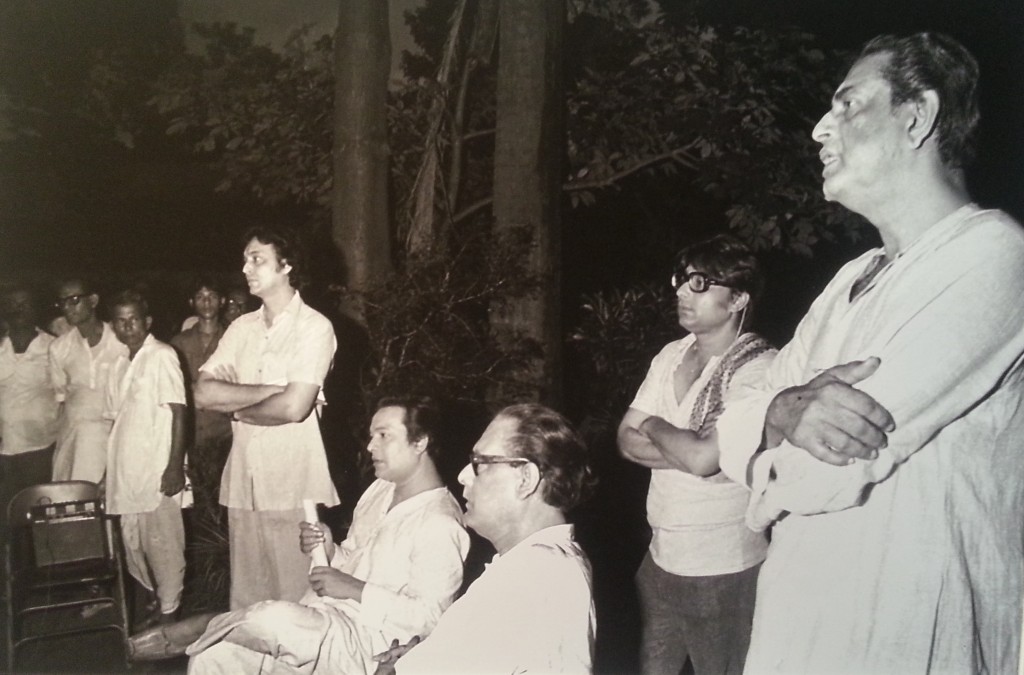
Soumitra also mentioned Nani Ganguly who played Scarface Jodu in Ashani Sanket and the village bum Lakha in Aranyer Din Ratri and Khairatilal Lahori as the care-taker of the forest bungalow in Aranyer Din Ratri who was actually a professional actor. It was Ray’s insightful eyes that could bring out the person best suited for the roles – irrespective of their status as actor or not. In mentioning in details about these lesser known actors in lieu of the bigger names we always seem to discuss and debate, Soumitra paid them a tribute and in style, offered his homage to his mentor.
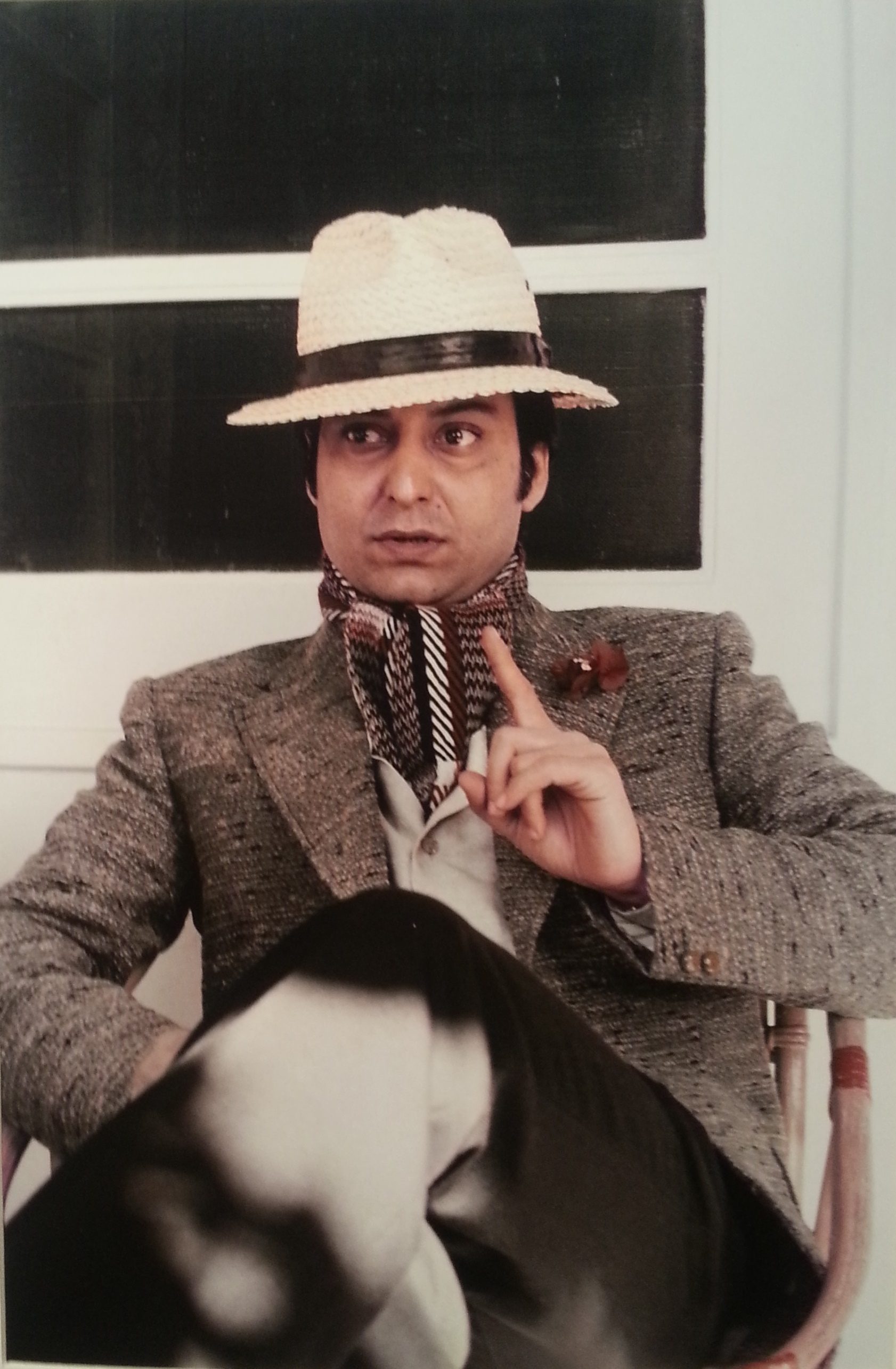
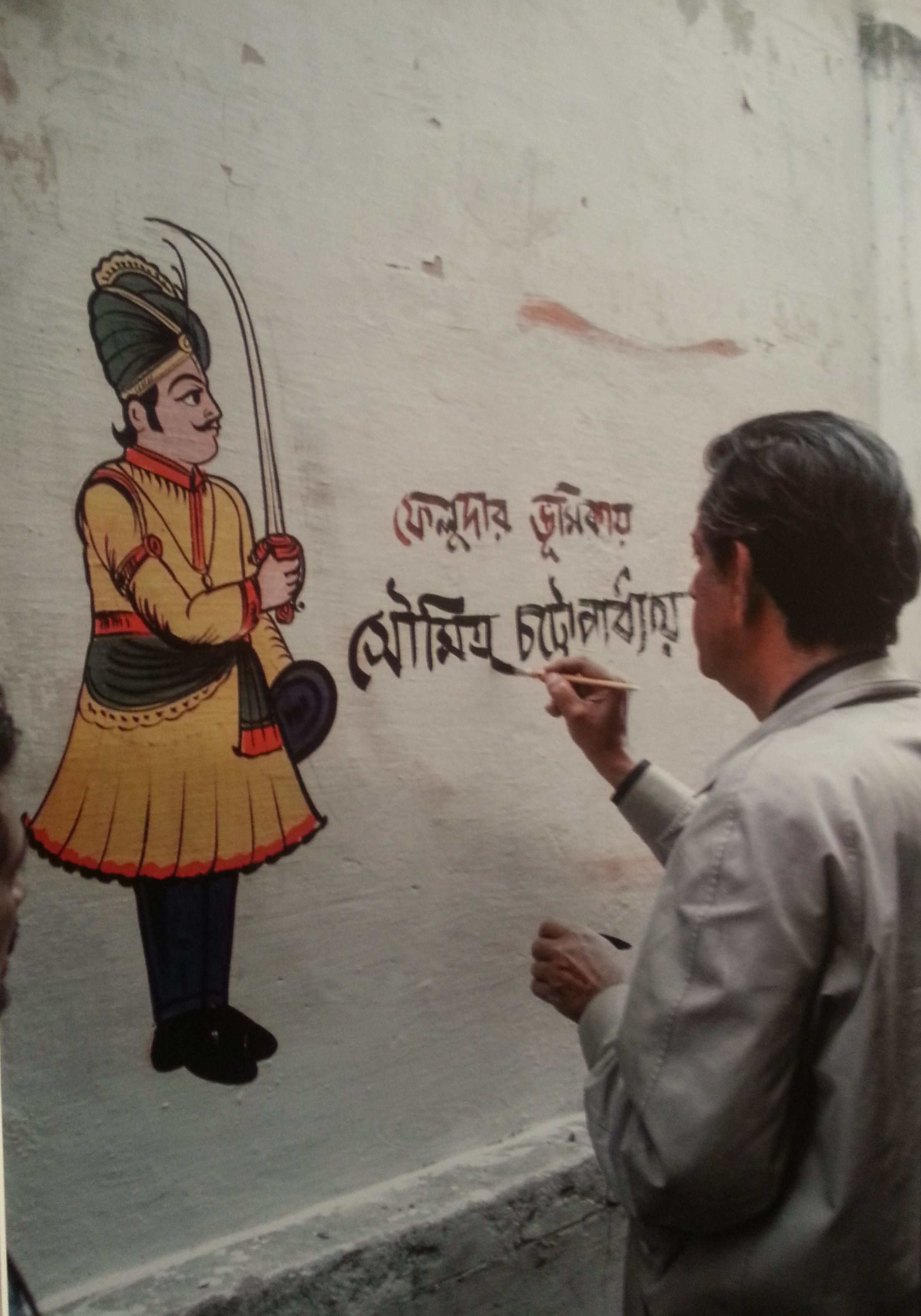
The evening ended with a henceforth-unseen interview clip of Ray taken during the screening of Shatranj Ki Khilari in London by the British Press. Any interview of Ray mesmerizes us with his clarity, confidence and subtle nuanced references of things already known but somehow overlooked in the melee. As we come out of the auditorium on an otherwise hot and humid day there are drops of rain – not even a drizzle. Soumitra Chatterjee – Ray’s hero comes out and rides his car and vanishes from the scene – a scene which was as much curated by Ray as was by him.

One Response
Enriched.
Really sad that I missed out the session at ICCR.