

God’s Own Country, the state of Kerala, could easily be given the honorary title – “Land of Temples”. While this rechristening is unlikely to happen, given that Tamil Nadu has already bagged that award, one cannot help but wonder “How many temples does this small state have?”
There are the famous ones like Sabarimala, Sree Padmanabhaswamy Temple (Trivandrum), Guruvayur Sri Krishna and Vadakunnathan Temple (Thrissur district),Vaikom Mahadeva Temple (Kottayam District) to name a few. What has caught my attention though, is the mesmerizing beauty of the lesser known temples tucked away amidst paddy fields, banana and jackfruit plantations and coconut trees.
To a Malayali, a visit to a temple in the wee hours of the morning is an absolute necessity — to offer prayers, meet and greet the community, and discuss important societal concerns. In small towns and villages, life revolves around temples. There are strict rules of worship including
(a) who should enter the temple[1]
(b) in what manner[2] and
(c) how far[3]
(d) the direction of circumambulation
(e) the sequence in which prayers can be offered to the deities
(f) the type of offering and (g) the manner in which it should be dedicated.
Festivals form an integral part — usually accompanied by lighting of the ceremonial oil lamps (Figure 1), procession of decorated elephants, and the sound of the panchavadyam[4].

One of the lesser known temples is the Mulakunnathukavu temple (Figure 2), located about 10 kms north of the town of Thrissur on the Thrissur-Shornur highway. The presiding deity is Lord Ayyappa. Legend has it, that Ayyappan (also popularly known as Sastavu or Manikandan) was the son of Harihara — a rigvedic deity who is the composite form of Shiva and Vishnu [2]. He is worshipped as a local deity in the hills bordering the states of Tamil Nadu and Kerala and one finds very little reference of him amongst Hindu gods worshipped in the Northern part of the country.
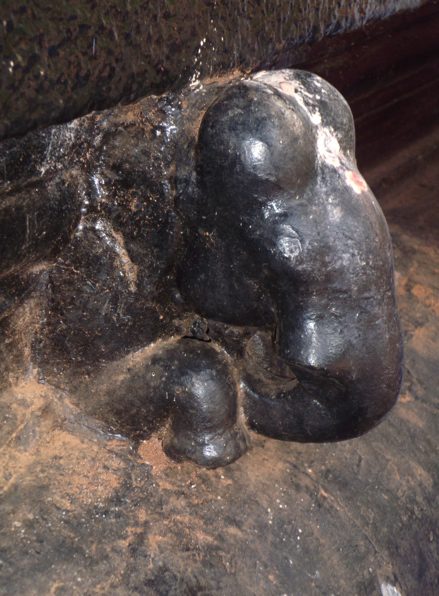
However, the worship of Ayyappan has been steadily increasing in the 20th century with Kerala possibly having the largest number of devotees. Lord Ganapathi is also worshipped in the Sreekovil. Other deities worshipped in this temple include Shiva, Krishna, Naga, and Bhagavati (in the form of Kali). The temple is a Mahakshetra-since it has all the major components of a Kerala temple including a sreekovil, pradakshinavattam, namaskara mandapam,chuttambalam, and koothambalam. The exterior walls have exquisite decorations including elephants made out of stone(Figure 3).
An old Dravidian ritualistic art form, Ayyappan Thiyattu, is performed inside this temple on auspicious occasions. Thiyattu is an offering to propitiate Lord Ayyappa by those intending to have off-springs, attain knowledge, fulfillment of desires or avoid calamities [1].
It involves paattu (music sung in kalampattu style, Kerala’s sopana style), koothu (pantomimic renderings of stories of Lord Ayyappan), and komaran (oracle dance – Figure 4) along with elaborate kalams (multi-colored floral drawings or dhooli-chitra kala – drawn with natural powders such as rice powder, turmeric, and semi-dry leaves). The music in thiyattu is also known as thouryarthrikasangeetam as the three elements of song, dance, and playing of the musical instrument are done simultaneously by the same performer unlike in a kathakali recital.
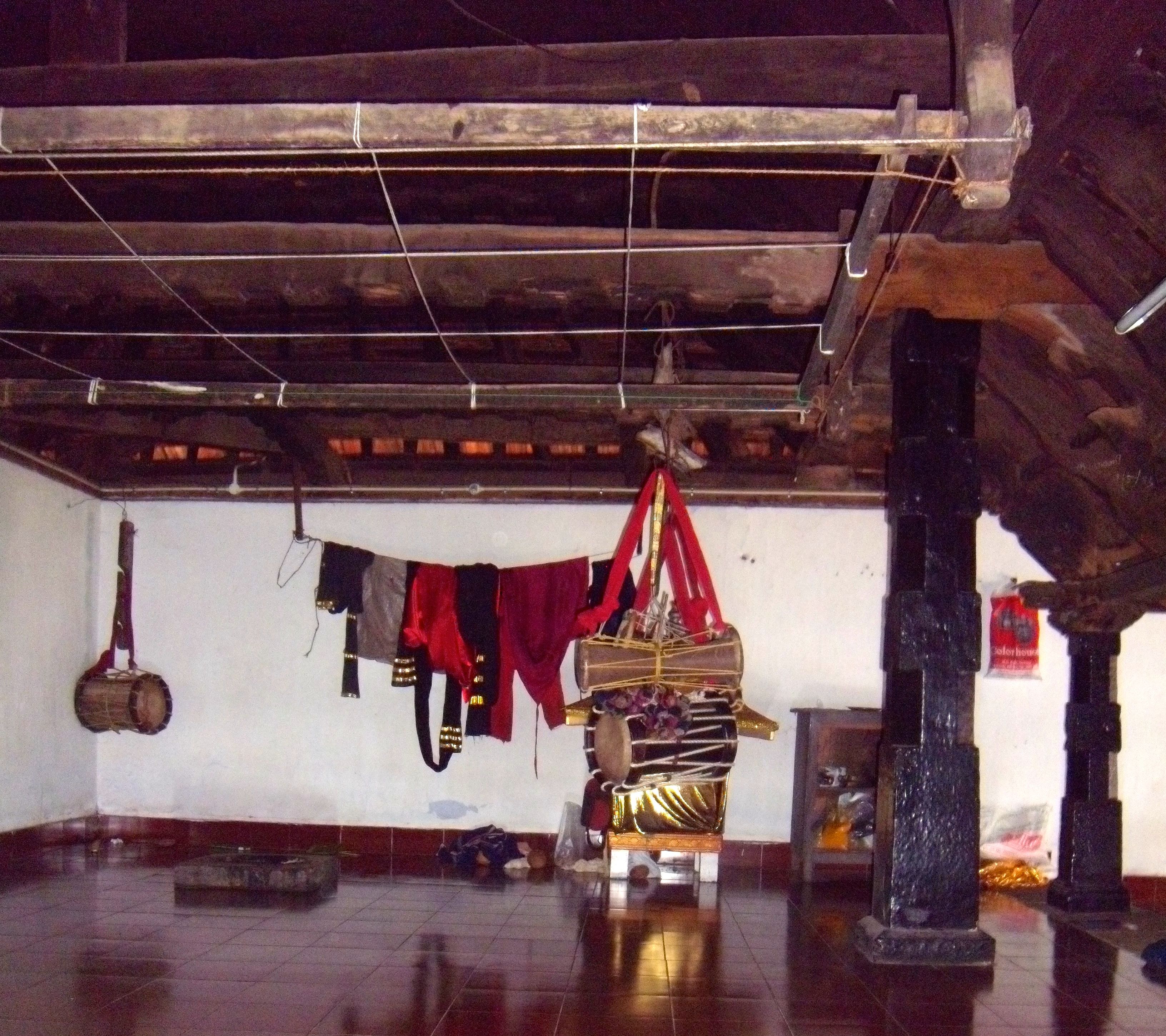
The tantric dance of the komaran, choreographed with difficult steps is also known as khadga nriytam as the oracle holds a divine sword during the performance. The oracle makes several rounds around the kalam with a display of weaponry exercises. At the climax, he jumps into the kalam in a trance and wipes out most of the kalam excepting the face step by step to the accompaniment of the percussion instruments – an event well worth witnessing.
[1] Many temples even today, do not permit entrance of non-Hindus.
[2] Men are often required to enter the temple after removing their shirts and vests.
[3] Access inside the sanctum sanctorum or garbha griha is restricted to the brahmins and priests who conduct regular rituals.
[4] Panchavadyam is an orchestra of five instruments – Kombu (horn, a wind instrument), Maddalam, Thimila, Elathalam (closely resembles cymbals) and Idakka.
References:
More to read in Travelogues
My Magnificent Trip Through Mesmerising Ladakh