
In the bustling streets of Japan back in the 1920s-1930s, a storyteller would clack two wooden sticks (Hyoshigi) together, signalling children to gather around a wooden stage mounted on a bicycle (Butai). This was Kamishibai (Paper-Play). Today, this beautiful street-storytelling format has found a new purpose in India, not just to entertain, but to share stories that could heal our planet.
Started in 2021, the Indian Kamishibai Association is a collective of storytellers who have embraced this art form to spread the joy of stories. To celebrate World Kamishibai Day (7th December), the Indian Kamishibai Association (IKA) launched the “Be a Kamishibai Champion” initiative. Our goal was to take a powerful story and share it with storytellers across the country, who in turn will reach out to a larger audience.
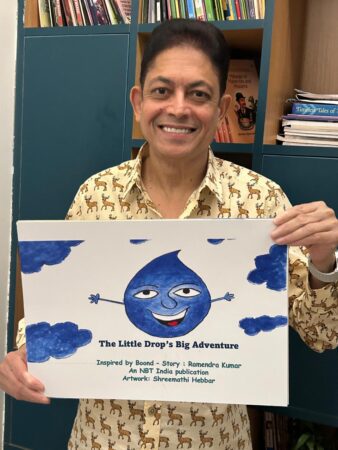
We chose the story “The Little Drop’s Big Adventure,” inspired by the book Boond authored by the renowned Ramendra Kumar and published by the National Book Trust (NBT). With the story’s soul provided by Ramendraji and the visuals hand-painted by the talented Shreemathi Hebbar, we created a set of 10 Kamishibai cards that were as visually stunning as they were educational.
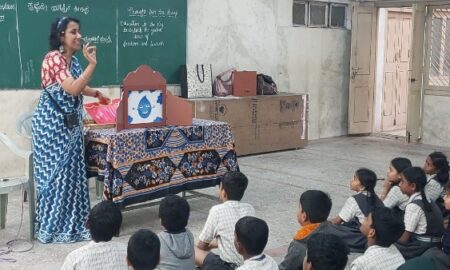
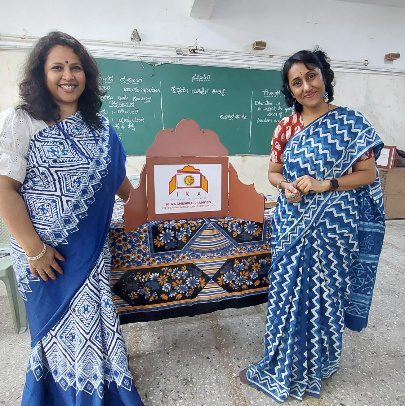
The journey began in December at a small government school in JP Nagar, Bengaluru. Alongside storyteller Seema Karanth, I shared the story of Boond with children from grades 5 to 7. We watched as the students were mesmerized by the sliding cards, following Boond the droplet from her home in the clouds to the polluted rivers of Earth.
But it didn’t stop there. Over the last two months, this initiative became a PAN-India movement. Storytellers registered, printed their A3 cards, and took Boond to schools, hospitals, and old-age homes and many more places, reaching over 3000 people so far. From metropolitan cities to rural community spaces, the message of water conservation and the devastating effects of pollution travelled through the unique “sliding” rhythm of the Kamishibai stage.
STEAM in Storytelling
While Boond is a touching narrative about environmental responsibility, it is also a powerful tool for STEAM (Science, Technology, Engineering, Arts, and Math) education.
In my sessions, the story became a gateway to discuss:
- The Water Cycle: Visualizing Boond’s journey from evaporation to precipitation.
- Germination: Understanding how a single “drop” brings life to a seed.
- Ecology: Observing the impact of human carelessness on aquatic ecosystems.
By combining the Art of Kamishibai with the Science of the environment, we moved beyond passive listening. We invited children to become guardians of our natural resources. Several after-session activities were also given by the storytellers, which invited the audience to reflect on the story and create their own water conservation ideas.
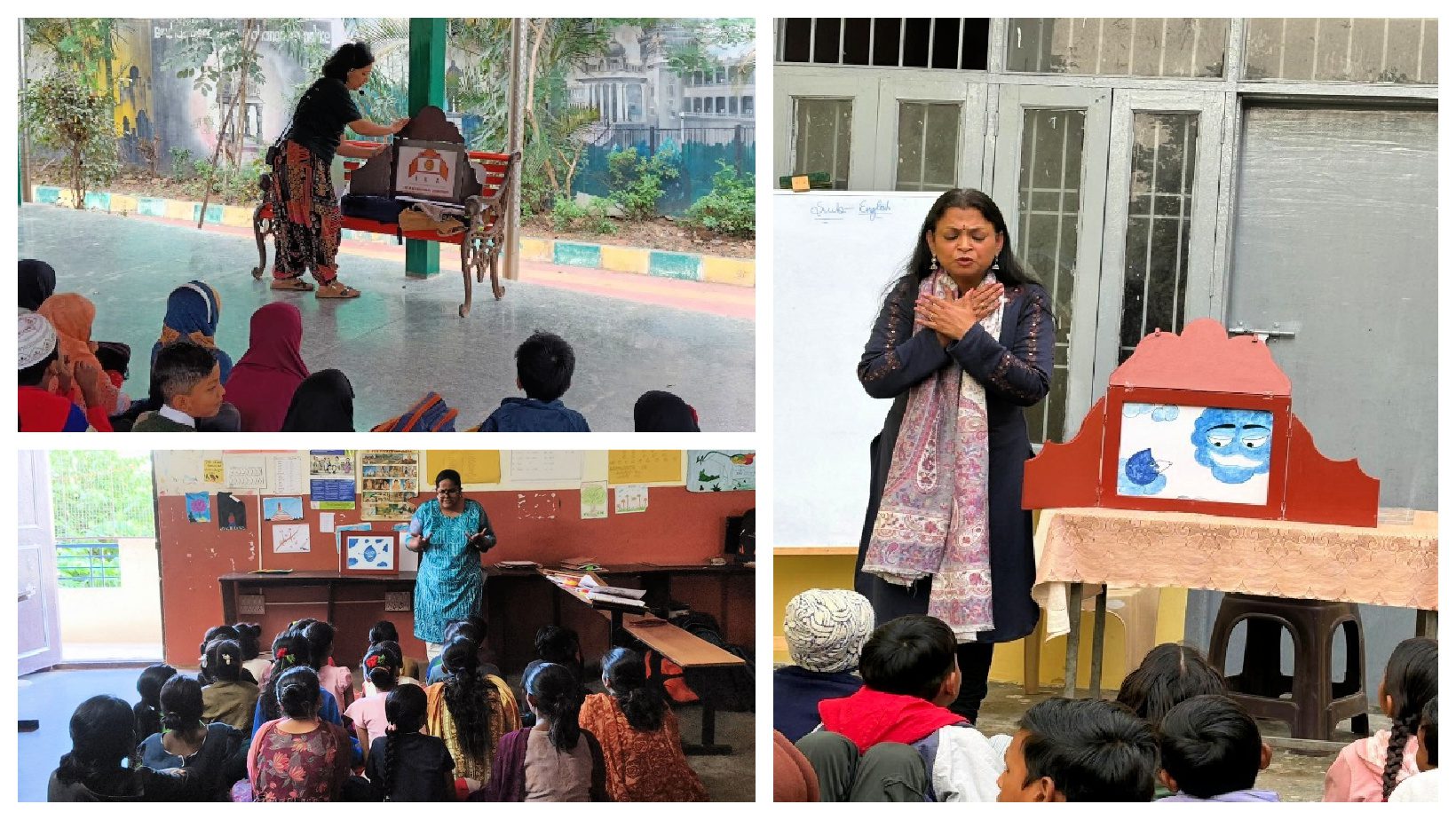
Kamishibai is a communal art form. It requires the storyteller and the audience to share a physical space and a focused moment of “Kyokan” (shared feeling). Through the “Be a Kamishibai Champion” initiative, we have seen storytellers, spread love, peace, and harmony.
As Grandpa Megh (the cloud) teaches humanity in the story, nature is a gift that requires our care. Through these wooden stages and hand-painted cards, we are making sure that the next generation doesn’t just hear the story of water, they feel its heartbeat.

Boond is one of Ramendra Kumar’s most popular picture books, having notched up sales of more than 3.8 lakh copies in just the last five years. It has been translated into several languages including ‘Parhaiya’ which is a vulnerable and lesser-known Indo-Aryan tribal language of Jharkhand, spoken by a relatively small and socially marginalised community. It has been printed many times and selected for Government of India’s Samagra Shiksha programme.
More Must Read in LnC
Ruinsara Lake Trek: Travelogue of a 6-Year-Old Mountain Ninja
WordMagic: Ramendra Kumar’s Creative Writing Workshop for St Joseph’s School