

By Learning & Creativity Team
Traditional short stories have a catchy start, a fluid free-flowing middle and a satisfying end. However, many modern writers find that such stories have the drawback of not being able to communicate the complexities they want to unravel.
They evolved a new style of story telling, the ‘open-ended narrative’ in which the conclusions are not clearly stated. The reader is left to resolve the situation with her/his imagination. The writer simply presents before the reader a sequence of events. Nothing more.
Open ended stories are primarily of two types: situational and character-based.
Situational-based open ended short story
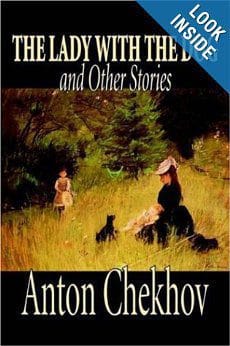
Probably, one of the best example of a situational-based open ended story is Anton Chekov, the well-known Russian writer’s “The Lady with the Dog”. The two central characters in this story, strangers at the beginning, fall in love with each other when on separate vacations.
With the vacation over, the two, there is a big difference in their age and social status, return to their respective homes. Incidentally, both are married and the man have children of the same age as the woman with whom he has fallen in love.
The man can’t forget her and goes in search for her. When he finds her, he discovers that she too cannot forget him. They resume their affair, though not letting others, especially their respective families know about it.
Chekov’s ending is open-ended. When it seems that the two are very close to a decision, in their heart they know that the end was very far away.
Hence, in such a story, there are no definite conclusions and it is left to the reader to draw one’s own conclusion. The situation remains unresolved because of events or circumstances.
Read the short story Wrong Picture to illustrate the example of a situational-based open-ended story.
Character-based open-ended short story
In an open-ended story or narrative, the reader is left to draw her/his conclusions from what is presented to her/him. Basically in character-based open-ended story lacks a clear-cut ending that follows from the nature(s) of the protagonists.
Take for instance a story, “My Enemy” by the well-known Hindi short story writer, Krishna Baldev Ved.
The narrator in this story runs into an old friend. They had been out of touch for long. The two are placed in different situations. The narrator is a married man and respectable. The friend on the other hand is derelict.
Despite the distance that has grown between the two, the man moves into to the narrator’s house. After this a series of incidents follow. Then the narrator’s wife, Mala, moves out of the house with her children. She threatens not to return till the friend is thrown out.
Five days passed after the narrator’s family had left. He now sits and contemplates the options available. He tells himself that if his wife were there, she would definitely come up with some alternative. However, she was not there and hence did not know what to do. It is on this note of self-realization that the story ends.
In this example of character-based open-ended narrative, the reader is definitely perplexed as to how the turmoil in the narrator’s mind was resolved. However, the reader is left free to make guesses from what has been revealed of the narrator’s personality.


The open ended story is not just a contemporary development in recent literature. Two examples that spring to mind are the story of Jonah in the Bible where questions are left to be answered by the reader, and Jesus’ parable of the fig tree in Luke 13:6-9 where we don’t find out what happens in the end of the story. The end is determined by the readers response. The style stimulates thoughtfulness.
[…] story was left open-ended, which meant more room for […]