

Jagannath Culture is not merely a religious belief, it is a way of life. Given below are a few nuggets which illustrate what makes Jagannath Culture an all encompassing consciousness:
- The three images of Lord Jagannath, Goddess Subhadra and Lord Balabhadra represent the three colours of humankind – black, yellow and white. Can there be a more evocative illustration of the concept of Vasudhaiv Kutumbakam or ‘world is one family’.
Today when planet earth is being rocked by violence and intolerance the concept of Vasudhaiv Kutumbakam, if internalised, can provide the healing touch.
- In temples the Lord is usually seen with his wife/companion. The Jagannath Temple is the only temple in the world where the Lord appears with his brother Lord Balabhadra and sister Goddess Subhadra. Can there be a better example of family values?
In modern India the joint family system is slowly breaking up and the nuclear family is becoming more and more the norm. This is leading to several social and psychological problems. By embracing the ethos of family values our society can once again usher in the era of brotherhood and peace for which it was famous.
- The images are made of wood. They signify commitment to the environment.
Nature is fast becoming the first casualty in man’s quest for prosperity. Man should draw inspiration from the Jagannath Culture and go back to preserving and nurturing nature.
- All the Gods and Goddesses are ensconced in their chambers waiting for their devotees to go to them for darshan. Lord Jagannath is the only Lord who, along with his siblings, comes out of his abode and reaches out to his devotee during the Rath Yatra which is also called the Patitapavan Yatra. Can there be a more eloquent example of love, affection and bonding?
It is often found and modern society that today’s leaders rather than reaching out to the people prefer to be in their cocoons of arrogance and power. As a result they get alienated from those whom they are supposed to serve. Rath Yatra teaches us the importance of achieving a connect between different layers of society.
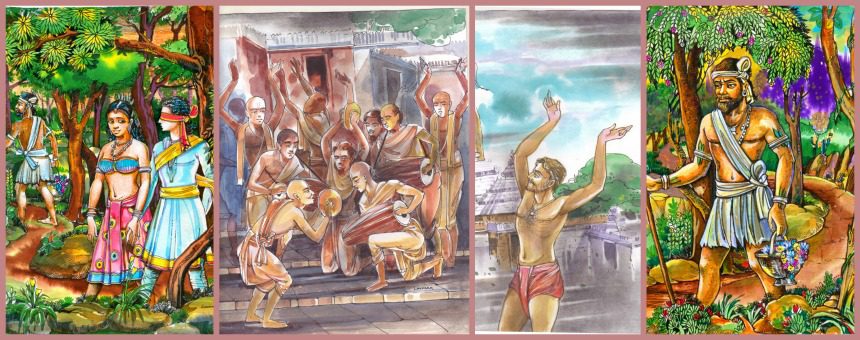
- As per legend, Lord Jagannath was originally worshipped in the form of Neelamadhav by a tribal known as Visvavasu. A class of sevaks known as Daitapatis, which has a tribal lineage, even now renders important services in the temple. The custom of involving tribals in religious ceremonies in a Vaishnavite temple is once again a phenomenon unique to the temple of Lord Jagannath.
Tribals have long been marginalised by the society. However, the Jagannath Culture doesn’t believe in excluding anyone, rather it encourages the participation of one and all.
- Lord Jagannath’s reach is beyond religion, faith and doctrine. His disciples include Adiguru, Sankaracharya, Sikh Guru, Nanak; Vaishnavite, Sri Chaitanya Deva; Ram Bhakta, Goswami Tulasi Das; devotee of Ganesh, Ganapati Bhatta; Muslim devotees, Kabir and Bhakta Salbeg; devotees such as Dasia Bauri, Mania Das and many others who belonged to lower caste and the Christian disciple, Captain Beat, etc.
The Jagannath Culture crosses the boundaries of caste, creed, religion and race to embrace the entire humankind.
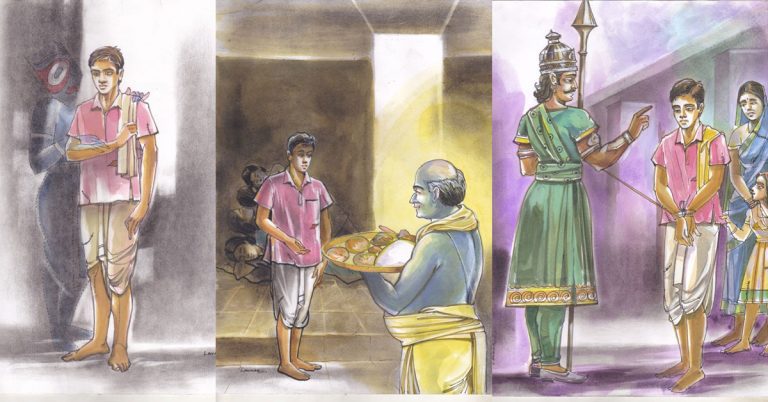
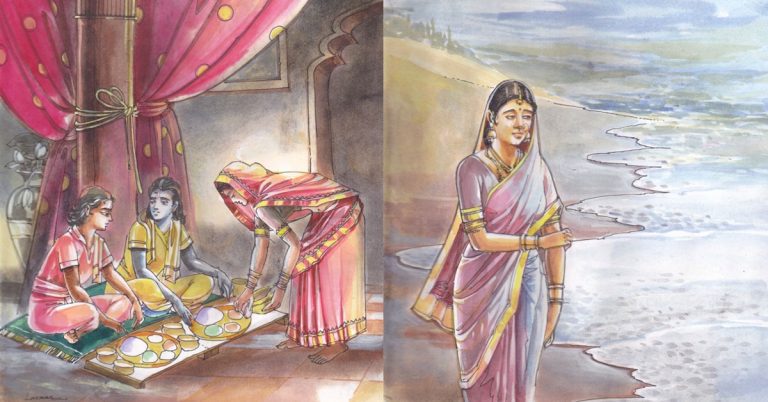
- An example of how the Jagannath Culture epitomizes a classless and casteless society is in the serving of Mahaprasad. Any one belonging to any caste can take the Mahaprasad or Kaivalya from the same plate.
Read the Tales of Lord Jagannath