We all were childlike once. We all possessed these wondrous qualities like unconditional love, trust, playfulness and simplicity. Somewhere on the road to adulthood we have shed these childlike virtues and adopted fear, mistrust, prejudice, doubt and selfishness.
Ramendra Kumar (Ramen) is an award-winning author, performance storyteller, and TEDx speaker whose 54 books span fiction for all ages, satire, biographies, and inspirational non-fiction. Translated into 33 languages and recipient of 41 All-India awards for children’s literature, his works — known for their wit, warmth, and emotional resonance — have touched readers across India and beyond. His titles with the National Book Trust (NBT), India alone have sold over 1.5 million copies.
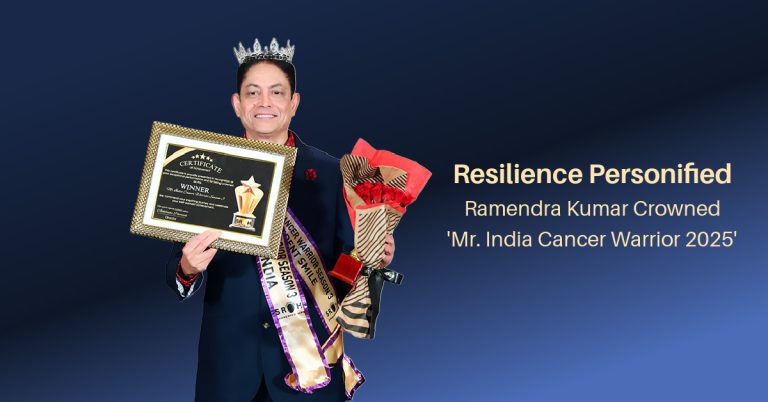
Ramen has participated in international literary festivals and marquee Indian events, including the Jaipur Literature Festival. He has served as a jury member for The Times of India’s Women “AutHer” Awards, a mentor for the Scholastic Writers Academy, and was named “Author and Storyteller of the Year” on Talking Stories, London.His arduous battle with cancer was featured on Humans of Bombay, one of India’s largest storytelling platforms, where his story garnered over four million views. In October 2025, he won the ‘Mr. India Cancer Warrior’ crown at a unique competition for cancer survivors held in New Delhi!
An alumnus of the prestigious Hyderabad Public School, Begumpet, Ramen is an engineer and an MBA who left his role as General Manager (Corporate Communications), SAIL, to pursue his true calling — writing, storytelling, and inspiring lives.Ramen’s website is www.ramendra.in and he has a page devoted to him on Wikipedia.
New posts delivered to your inbox. Unsubscribe anytime.
Subscribe
1 Comment
Oldest
NewestMost Voted
Partho Mondal
12 years ago
Thanks for this thought provoking article. You are right; we are “getting our perspectives muddled up” and we need to “control the childish Duryodhana in each one of us and encourage the childlike Krishna.”
How very true about a child following “the language of his heart.” This reminds me of an incident about 2 years ago when Antarip the 5 year old nephew of my wife came to visit us with his mother and father.
In the evening, my then 6 year old child Anshula took Antarip to play with her friends. They had a great time and effortlessly communicated with each other, even though Antarip did not understand Hindi (he lives in Kolkata) and Anshula’s friends did not know a word of Bengali. They were listening to the language of their hearts.
Our biggest challenge, as you have so rightly pointed out, is we forget to enjoy the moment. We are more concerned about what has happened in the past or may happen in the future. The other day at lunch time we were soaking the beautiful sunshine at the roof of our office building. It is springtime here in New Delhi.
Instead of enjoying the weather my colleague was complaining that it is getting so warm in March. The months of May and June will be very hot; we will have a difficult time in summer. In peak summer temperatures in New Delhi go up to 45 degree Celsius.
The other challenge of course is unlike a child we do not trust or accept things easily – most of the time we are Doubting Thomases. We surround ourselves with walls of “fear, mistrust, prejudice, doubt and selfishness.”
After reading your article I am consciously trying to be natural and childlike, and not curb my impulses.
I look forward to more such thought provoking posts of yours.











Thanks for this thought provoking article. You are right; we are “getting our perspectives muddled up” and we need to “control the childish Duryodhana in each one of us and encourage the childlike Krishna.”
How very true about a child following “the language of his heart.” This reminds me of an incident about 2 years ago when Antarip the 5 year old nephew of my wife came to visit us with his mother and father.
In the evening, my then 6 year old child Anshula took Antarip to play with her friends. They had a great time and effortlessly communicated with each other, even though Antarip did not understand Hindi (he lives in Kolkata) and Anshula’s friends did not know a word of Bengali. They were listening to the language of their hearts.
Our biggest challenge, as you have so rightly pointed out, is we forget to enjoy the moment. We are more concerned about what has happened in the past or may happen in the future. The other day at lunch time we were soaking the beautiful sunshine at the roof of our office building. It is springtime here in New Delhi.
Instead of enjoying the weather my colleague was complaining that it is getting so warm in March. The months of May and June will be very hot; we will have a difficult time in summer. In peak summer temperatures in New Delhi go up to 45 degree Celsius.
The other challenge of course is unlike a child we do not trust or accept things easily – most of the time we are Doubting Thomases. We surround ourselves with walls of “fear, mistrust, prejudice, doubt and selfishness.”
After reading your article I am consciously trying to be natural and childlike, and not curb my impulses.
I look forward to more such thought provoking posts of yours.